Chambres d'hôtes in France: what the law requires, how they differ from a B&B, a gîte or a hotel, what to check and the real budget, around €80 a night.
A chambre d'hôtes is the French take on the bed and breakfast, but with a twist that matters when you book: it is a legally defined format. French tourism law caps it at 5 rooms and 15 guests, requires breakfast to be included in the price and expects the owner to welcome you in person, in their own home. Choosing well therefore starts with knowing what you are buying: a night, a breakfast and a real encounter with a local host. On Driing, nearly one listing in three is a chambre d'hôtes, with a median price of around €80 a night. This guide explains how it differs from an English-style B&B, a gîte or a hotel, who it suits, what to check before booking and where the choice is widest. Browse our chambres d'hôtes across France, all booked directly with their owners.
A chambre d'hôtes is a furnished room in the owner's home, let to tourists for one or more nights, with services included. That is the definition in article L324-3 of the French Code du tourisme (the tourism code), detailed in articles D324-13 and following. The official Service-Public website sums up the conditions:
Two points surprise many visitors. A chambre d'hôtes is always an unrated property: there are no official stars, as there are for hotels, only private quality labels. And the owner must have declared the activity to the local town hall before welcoming guests. Put together, these rules make a clear promise: few rooms, a host on site and breakfast included.
The main difference is that “bed and breakfast” is a loose label in English, while “chambre d'hôtes” is a protected term in France. In the UK, Ireland or the US, a B&B can be anything from a spare room in a family home to a small guesthouse with staff and a manager, and the owner does not necessarily live on site.
In France, the law ties the name to a precise format: a limited number of rooms, breakfast always included, and a host who lives there and greets you personally. Larger establishments, sometimes marketed as “maisons d'hôtes”, cannot legally call themselves chambres d'hôtes if they exceed the caps.
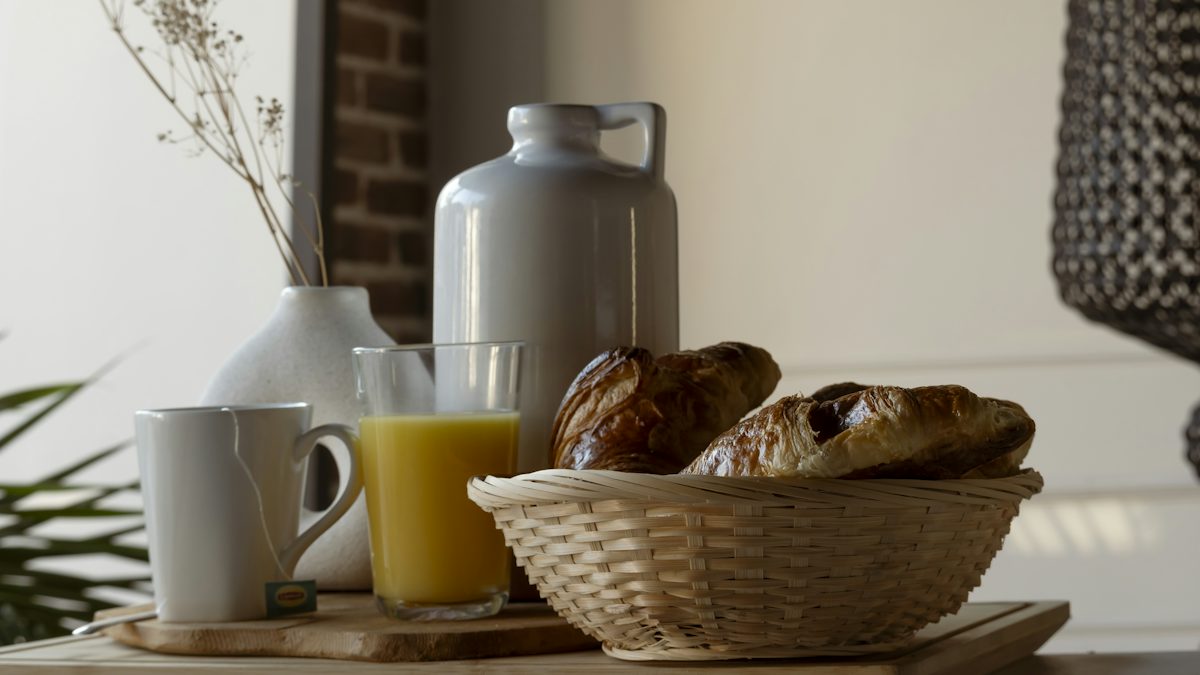
Breakfast itself also differs. Expect a continental spread in most homes: fresh bread, croissants, homemade jams, yoghurt, fruit, coffee or tea. A cooked breakfast is rare unless the host offers it. In return, many hosts serve local produce, sometimes from their own garden or orchard.
The question to ask is simple: do you want to share someone's home, or have a place to yourself? Everything else follows.
For a week with children and home cooking, a gîte is the better fit. A chambre d'hôtes answers a different wish: to be hosted rather than simply housed.
A chambre d'hôtes works best for short stays, as a couple or solo, when you want to discover a place rather than settle in. Four kinds of traveller get the most out of it.
Couples. One room, breakfast served, a house with character: it is the natural format for a romantic weekend, with no shopping or cleaning.
Road trips and walking holidays. When you only need a night, a shower and a proper breakfast before moving on, a chambre d'hôtes usually accepts one-night stays, where many gîtes require several nights or a full week.
Discovering a region. Your host knows the markets, the restaurants and the walks the guidebooks miss.
Solo travellers. A room costs less than a whole house, and having a host on site is reassuring in a remote village.
On the other hand, a large family or a group staying a week will rarely find it convenient: several rooms to pay for, no kitchen and set times to respect.

Six questions prevent most disappointments. They are rarely all answered in the listing, so ask the host before you commit.
If you are travelling by train, our guide to car-free holidays in France explains how to choose a base near a station.
In a chambre d'hôtes you are a paying guest of a family, not a hotel customer: a few simple habits make the stay pleasant for everyone.
Give your arrival time, and warn of any delay: your host plans the day around welcoming you.
Respect quiet hours and private spaces. The house sleeps in the evening and early morning. The garden or lounge may be shared, the family kitchen and living rooms are not, unless you are invited.
A few words of French go a long way. “Bonjour” on arrival and “merci” at breakfast are appreciated, even if your host speaks English.
Mention dietary needs in advance, and enjoy the conversation without feeling obliged: a good host also understands that you may want some peace.
Budget around €80 a night, breakfast included, based on the chambre d'hôtes listings published on Driing in October 2026. That is slightly below the median for all Driing properties (€85) and for whole rentals (around €90), which often sleep more people.
Half of all chambres d'hôtes fall between roughly €75 and €100. Regional differences are real: around €75 in Pays de la Loire and Hauts-de-France, around €80 in Brittany, Auvergne-Rhône-Alpes, Nouvelle-Aquitaine and Occitanie, close to €90 in Provence and Normandy, more in the Paris region.
When comparing with a hotel, compare like for like: breakfast for two, often charged separately in hotels, is included here. Add the taxe de séjour (a local tourist tax, usually from a few cents to a few euros per adult per night) and dinner if you choose the table d'hôtes.
Auvergne-Rhône-Alpes, Nouvelle-Aquitaine, Provence-Alpes-Côte d'Azur and Occitanie account for half of the chambres d'hôtes listed on Driing. Here is where to look first.
Auvergne-Rhône-Alpes comes first. Our chambres d'hôtes in Auvergne-Rhône-Alpes are especially numerous in the Puy-de-Dôme, the top département, between the Chaîne des Puys volcanoes and the Livradois-Forez hills. The Puy-de-Dôme B&Bs suit volcano hikes, with stops such as Billom, a medieval town.
Nouvelle-Aquitaine follows closely, from the Charente coast to the Arcachon Basin. B&Bs in the Gironde combine vineyards and ocean, and Le Teich, known for its bird reserve, is a quiet base for exploring the basin.
Provence-Alpes-Côte d'Azur offers stone houses and mas (farmhouses) in the heart of villages. Our chambres d'hôtes in Provence cluster in the Vaucluse and the Bouches-du-Rhône: Vaucluse B&Bs lead to the Luberon and to L'Isle-sur-la-Sorgue, the antiques capital.
Where chambres d'hôtes dominate. In Brittany and Hauts-de-France, nearly one Driing listing in two is a chambre d'hôtes. In Normandy, our chambres d'hôtes in Normandy let you stay in Honfleur or in the Pays d'Auge countryside.

To be honest, a chambre d'hôtes does not suit every trip. Better to know before you book.
Less privacy. You share a house, sometimes a bathroom, often breakfast. If you want the anonymity of a hotel, this is not the right format.
Set times. Check-in by appointment, breakfast at a fixed time, a quiet house in the evening: flexibility depends on your host.
Variable standards. With no official rating, the name guarantees a legal framework, not a level of comfort. Photos, a precise room description and a message exchange with your host are your best guides.
“From” prices. The price shown is often the lowest rate, outside peak season. Ask for the exact price for your dates and number of guests.
A chambre d'hôtes is by nature a direct relationship between a traveller and a host, and Driing is built to keep it that way. On commission-based platforms, service fees are added to the host's price. On Driing there is no commission, for you or for the host: the price shown is the host's price, which means savings of 17% on average compared with commission-based platforms.
The process is simple: you find a chambre d'hôtes, contact the host through the listing's form or the contact details shown on the page, agree together on dates, breakfast or table d'hôtes, then pay the host directly, on the terms they offer. It is the right moment to ask the questions in this guide.
Before any listing goes live, the Driing team checks the host's identity and proof of ownership of the property, and speaks with the host in person. A fraudster therefore cannot publish a fake chambre d'hôtes or pass off a house that is not theirs. More than 500 properties are listed today on Driing, the commission-free holiday rental platform.
What is a chambre d'hôtes in France?
It is a furnished room in the owner's home, let to tourists for one or more nights, with breakfast and linen included. French law limits it to 5 rooms and 15 guests at a time and requires the owner to welcome guests in person.
Is a chambre d'hôtes the same as a B&B?
It is the French equivalent, but more tightly defined. Unlike the broad English term, “chambre d'hôtes” is regulated: a limited number of rooms, breakfast always included and a host who lives on site. Larger guesthouses cannot use the name.
Is breakfast always included in a chambre d'hôtes?
Yes, it is a legal requirement: breakfast is included in the price of each night and served by the owner. It is usually continental, with bread, pastries and homemade jams, so ask in advance if you have dietary needs.
Does a chambre d'hôtes always have a private bathroom?
No. The rules only require each room to have access to a bathroom and toilet, directly or not. Many chambres d'hôtes do have en-suite bathrooms, but ask the host to confirm if it matters to you.
How much does a chambre d'hôtes cost in France?
On Driing, the median price of a chambre d'hôtes is around €80 a night, breakfast included (October 2026). Half of all rooms cost roughly €75 to €100, with higher prices in Provence, Normandy and the Paris region. The local tourist tax may be added.
What is a table d'hôtes?
It is an evening meal offered by the chambre d'hôtes owner, on top of the room price. It is optional, reserved for staying guests and usually a single set menu shared at the host's table. Book it in advance.
How can I book a chambre d'hôtes without paying commission?
On Driing, you contact the owner directly through the listing's form or contact details, then agree on dates and payment with them. No commission is added to the host's price, and every host has been checked (identity, proof of ownership, a conversation with the team) before going live.
A chambre d'hôtes is a room in a local's home, with no more than 5 rooms and 15 guests, breakfast included and a host who welcomes you in person. More regulated than an English-style B&B, it is neither a hotel nor a gîte: it is the format for short stays, couples and solo travellers, road trips and discovering a region.
Before booking, check the bathroom, breakfast, table d'hôtes, arrival time, pet policy and access without a car. Budget around €80 a night, with the widest choice in Auvergne-Rhône-Alpes, Nouvelle-Aquitaine and Provence.
To find yours, browse our chambres d'hôtes to book direct on Driing: you write to the host, ask all your questions and pay the price they set, with no commission.
The rules quoted are those of the French tourism code as presented by Service-Public on 21 May 2026. They may change: if in doubt about a service, the room or cancellation terms, ask the host for written details before booking.
Photo credits. Cover: Fabienne Campello on Unsplash. Lavender field in Provence: Emma HONG on Unsplash. Puy de Dôme: Andréa Villiers on Unsplash.